Skip to main content
The Washington Institute for Near East Policy
Menu
Toggle Main Menu
Homepage
Main navigation
Analysis
Experts
About
Support
Maps & Multimedia
Trending:
Military & Security
Energy & Economics
Iran
Lebanon
Gulf States
Toggle List of
All Regions & Issues
Regions & Countries
Egypt
Gulf States
Iran
Iraq
Israel
Jordan
Lebanon
North Africa
Palestinians
Syria
Turkey
Issues
Arab & Islamic Politics
Arab-Israeli Relations
Democracy & Reform
Energy & Economics
Great Power Competition
Gulf & Energy Policy
Military & Security
Peace Process
Proliferation
Terrorism
U.S. Policy
Close List of All Regions and Issues
Close
Search Policy Analysis
TWI English
TWI Arabic:
اللغة العربية
Fikra Forum
Close Menu
Close
Search Policy Analysis
Search
Policy Analysis
Filter by:
Keyword
Region
- Any -
Egypt
Gulf States
Iran
Iraq
Israel
Jordan
Lebanon
North Africa
Palestinians
Syria
Turkey
Issue
- Any -
Arab & Islamic Politics
Arab-Israeli Relations
Democracy & Reform
Energy & Economics
Great Power Competition
Gulf & Energy Policy
Military & Security
Peace Process
Proliferation
Terrorism
U.S. Policy
Media type
- Any -
Audio
Maps & Graphics
Multimedia
Video
Date Published
- Any -
Past 7 Days
Past 30 Days
Past Year
Custom range...
Start date
End date
Type
- Any -
Articles & Testimony
Brief Analysis
In-Depth Reports
Sort by
Oldest first
Newest first
Found
12120
results
Brief Analysis
Europe’s Offer to Help Strengthen Lebanon’s Sovereignty: Ensuring U.S. Coordination
As UN peacekeepers prepare to depart, an EU mission could help boost Washington’s efforts in Lebanon—provided Europeans can closely coordinate their proposals with the future UN presence and the U.S. focus on sovereignty and disarmament.
Jul 2, 2026
◆
Souhire Medini
Articles & Testimony
Abolishing Lebanon’s ‘Anti-Normalization’ Laws: A Prerequisite for Peace
Recent Lebanese media engagement with Israelis is a welcome sign, but U.S. mediators should let this organic trend gain momentum for the time being rather than pressuring Beirut to make immediate legislative changes.
Jul 1, 2026
◆
David Schenker
Video
Brief Analysis
Russia, the Iran War, and the Middle East
Join us for an expert conversation exploring how the Iran war will change Russia's ambitions in the Middle East. Featuring Keith Kellogg, Anna Borshchevskaya, and Matt Tavares. Watch live starting at 12:00 noon EDT (1600 GMT) on Thursay, July 9, 2026.
July 9, 2026, starting at 12:00 noon EDT (1600 GMT)
◆
Keith Kellogg
Anna Borshchevskaya
Matthew Tavares
Brief Analysis
How Morocco’s Religious Rehabilitation Model Could Help Gaza
Although local religious and social differences would present some obstacles, the proven exportability of Rabat’s deradicalization machinery and the kingdom’s good working relations with the Israeli government make it an intriguing candidate for inclusion in the wider Gaza stabilization effort.
Jul 1, 2026
◆
Salma Annasse
Video
Brief Analysis
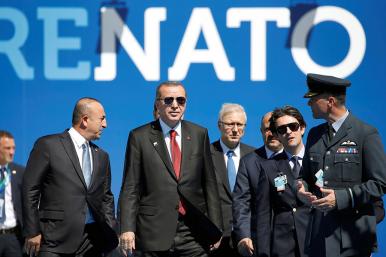
Middle East in Crisis, NATO in Disarray: The Stakes for the Ankara Summit
Watch an expert preview of next month's NATO summit in Ankara as the alliance deals with lingering tensions from Ukraine, Iran, and other crises.
Jun 29, 2026
◆
Levent Gumrukcu
Julianne Smith
Soner Cagaptay
Brief Analysis
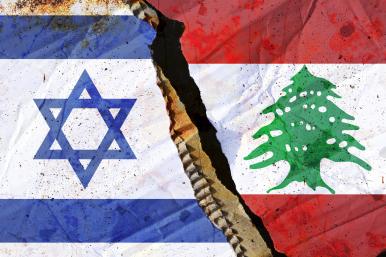
14 Points on the 14 Points: Assessing the Israel-Lebanon Framework Agreement
This landmark document offers a once-in-a-generation opportunity to build real peace between Beirut and Jerusalem, but progress needs to be swift and visible given the threat of violent opposition from Iran and its local allies.
Jun 29, 2026
◆
Robert Satloff
Articles & Testimony
Why Siccing Syria’s Army on Hezbollah Is So Dangerous
The potential upsides of implementing the Trump administration’s poorly conceived idea are negligible at best, while the downsides would be legion, including further damage to Middle East stability and American interests.
Jun 28, 2026
◆
David Schenker
Maps & Graphics
Brief Analysis
Iran Is Still Intent on Preventing a Return to the Old Navigational Order
Constricted traffic patterns, escalating warnings, uncertain mine threats, and a new drone attack all suggest that Tehran has no intention of willingly going back to business as usual in the Strait of Hormuz, regardless of diplomatic breakthroughs.
Jun 26, 2026
◆
Noam Raydan
Articles & Testimony
Moscow and the Middle East
Whatever course Iran and the wider Middle East may take following the war, Russia is well positioned for the aftermath.
Summer 2026
◆
Anna Borshchevskaya
Articles & Testimony
Iran Didn’t Win the War: Tehran Is Still Losing the Long Game
The task now is not to achieve an unattainable final victory, but to consolidate allied gains, prevent bad outcomes on the nuclear and navigational files, and ensure that Iran remains weaker than when conflict first broke out in 2023.
Jun 25, 2026
◆
James Jeffrey
Articles & Testimony
An Emerging International Partnership Is Succeeding
By incorporating Ukraine and other like-minded states from the Middle East and Asia, the G7 Summit highlighted the net progress made on countering Iranian, Russian, and Chinese threats to the American-led global security and economic system.
Jun 24, 2026
◆
James Jeffrey
Brief Analysis
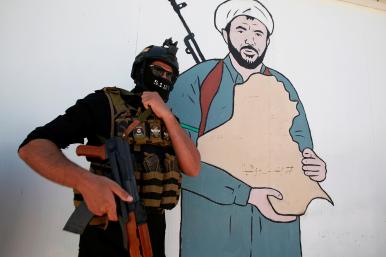
Making the Best of Iraqi Militia “Disarmament”
Although claimed compromises by some of Iran’s proxies are unlikely to result in actual disarmament anytime soon, Washington can still erode Tehran’s illicit financial networks by carefully exploiting the militias’ desire to be treated as normal political actors.
Jun 24, 2026
◆
Hamdi Malik
Video
Brief Analysis
A Postwar Middle East? The U.S.-Iran Negotiations and the Region’s Future
Three experts discuss the terms, gaps, and wider regional implications of the new MOU, including how it is being received inside the Gulf states and Iran.
Jun 22, 2026
◆
Richard Nephew
Dennis Ross
Holly Dagres
Articles & Testimony
The Board of Peace: Between Ambition and Distraction
An in-depth look at why the board’s lack of progress in Gaza makes it unlikely to serve its envisioned role of resolving conflicts around the world.
June 2026
◆
Ghaith al-Omari
Articles & Testimony
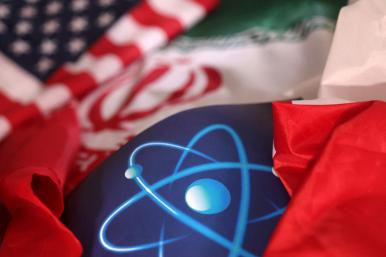
This Is Not a Grand Bargain With Iran. Good.
Although the United States and the world needed shipping to resume through the Strait of Hormuz, negotiating a nuclear agreement is not a postwar priority.
Jun 18, 2026
◆
Michael Singh
Articles & Testimony
The Middle East Power Paradox: How the Iran War Will Transform America’s Military Role
Although the U.S. military approach to the region has delivered many operational successes, the Iran war has exposed its serious shortcomings and created new challenges.
Jun 16, 2026
◆
Dana Stroul
Articles & Testimony
Don’t Mistake Friction for a Broken Alliance with Israel
Presidential spats with Israeli prime ministers are nothing new, and scapegoating America’s most capable ally in the Middle East would mean more work for U.S. forces, not less.
Jun 16, 2026
◆
Michael Singh
Articles & Testimony
Trump Told Iranians to Keep Protesting. Then He Abandoned Their Cause.
With the regime still in place, the war has left ordinary Iranians worse off, and U.S. policy has compounded their sense of abandonment.
Jun 16, 2026
◆
Holly Dagres
Articles & Testimony
The U.S. Should Not Encourage Syria to Enter Lebanon
A young government working to secure its own territory is poorly positioned to open new fronts outside its borders, and Hezbollah would quickly exploit such a move to its advantage.
Jun 12, 2026
◆
Andrew J. Tabler
Video
Brief Analysis
Back to Bombs or Driving to a Deal? Assessing the U.S.-Iran State of Play
Three experts discuss the fallout from the latest military strikes, along with the potential contours and implications of a newly announced agreement to halt the fighting and reopen the Strait of Hormuz.
Jun 12, 2026
◆
Dana Stroul
Robert Satloff
Michael Singh
Pagination
Current page
1
Page
2
Page
3
Page
4
Page
5
Page
6
Page
7
Page
8
Page
9
…
Last page
Last »
Next page
››